Self-hosted AI
AI with no third parties in the loop.
We build generative AI, assistants, vision and speech on open-weight models that run on infrastructure you choose. No AI vendor in your supply chain, and no AI provider sees your data.
Why self-hosted
Your AI, your models, your rules.
Most AI services send your data to someone else's model. Ours don't.
No AI-vendor supply-chain risk. Open-weight models you run and keep, with no API that can be repriced, restricted or switched off.
No third-party data exposure. Your documents, audio and video go to your models, never to an AI provider's API.
Infrastructure you choose. Your own servers, or a cloud provider you pick.
Data where it needs to be. Keep data in the region that suits your obligations.
In production, not in slides. Self-hosted speech, OCR and vision-language models already run on GPUs in production on the Knowby platform.
What we build
Five ways to put self-hosted AI to work.
-
Generative AI & agents
Video and documents into structured content, and agents that draft work for a person to approve.
Learn more about generative AI and agents -
AI assistants & MCP
Let Claude, ChatGPT and Copilot use your systems, with scoped access and human review.
Learn more about AI assistants and MCP -
Computer vision & speech
Models that read inspection photos, documents and speech.
Learn more about computer vision and speech -
Predictive AI
Forecasts and predictions from your operational data.
Learn more about predictive AI -
AI-accelerated engineering
How we build faster with AI, and how we help your team do the same.
Learn more about AI-accelerated engineering -
Wearables & Edge AI
AI on the device itself, from phones to smart glasses, with no cloud.
Learn more about wearables and Edge AI
Proof
Every story starts with what changed.
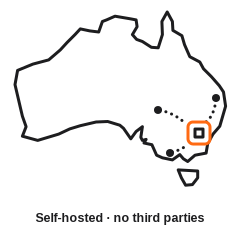
Video to guide, on in-region GPUs. Self-hosted speech, OCR and vision models turn a narrated video into a step-by-step guide on the Knowby platform.
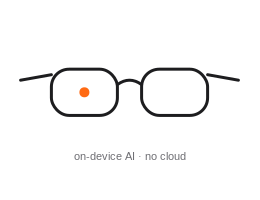
Hands-free help, with no cloud. An R&D prototype: Gemma 4 E2B running on the phone paired with Ray-Ban Meta glasses, reading work instructions aloud.
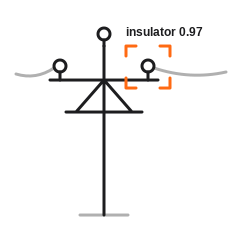
Reading pole-inspection photos. An object-detection model that finds insulators and cross-arms in inspection and drone photos for an electricity network.
How it works
The parts of our lifecycle that matter most here.
Strategy & discovery
We find the task worth automating and the data it needs.
Solution architecture
We choose the models, the hardware and where they run.
Development
We test models against your own examples and quality bar.
Launch & DevOps
We deploy to your infrastructure, with monitoring from day one.
Questions
What does self-hosted AI mean?
The AI models run on servers you control or choose, not behind an AI company's API. Your data goes to your models and nowhere else.
Are open-weight models good enough?
For many business tasks, yes. We test them against your own examples, choose the model size and quantisation that suit your hardware, and tell you plainly when a task isn't ready.
Where does it run?
On your own servers, or with a cloud provider you choose. We run open-weight models on NVIDIA GPUs in serverless containers, in serverless containers, in the region you choose.
Can our people still use ChatGPT, Claude or Copilot?
Yes. We can connect those assistants to your systems through MCP servers with scoped access and human review, and keep sensitive work on self-hosted models.
Bring us the hard problem.
A 45-minute discovery call with the engineer who'll build it.